For Builders
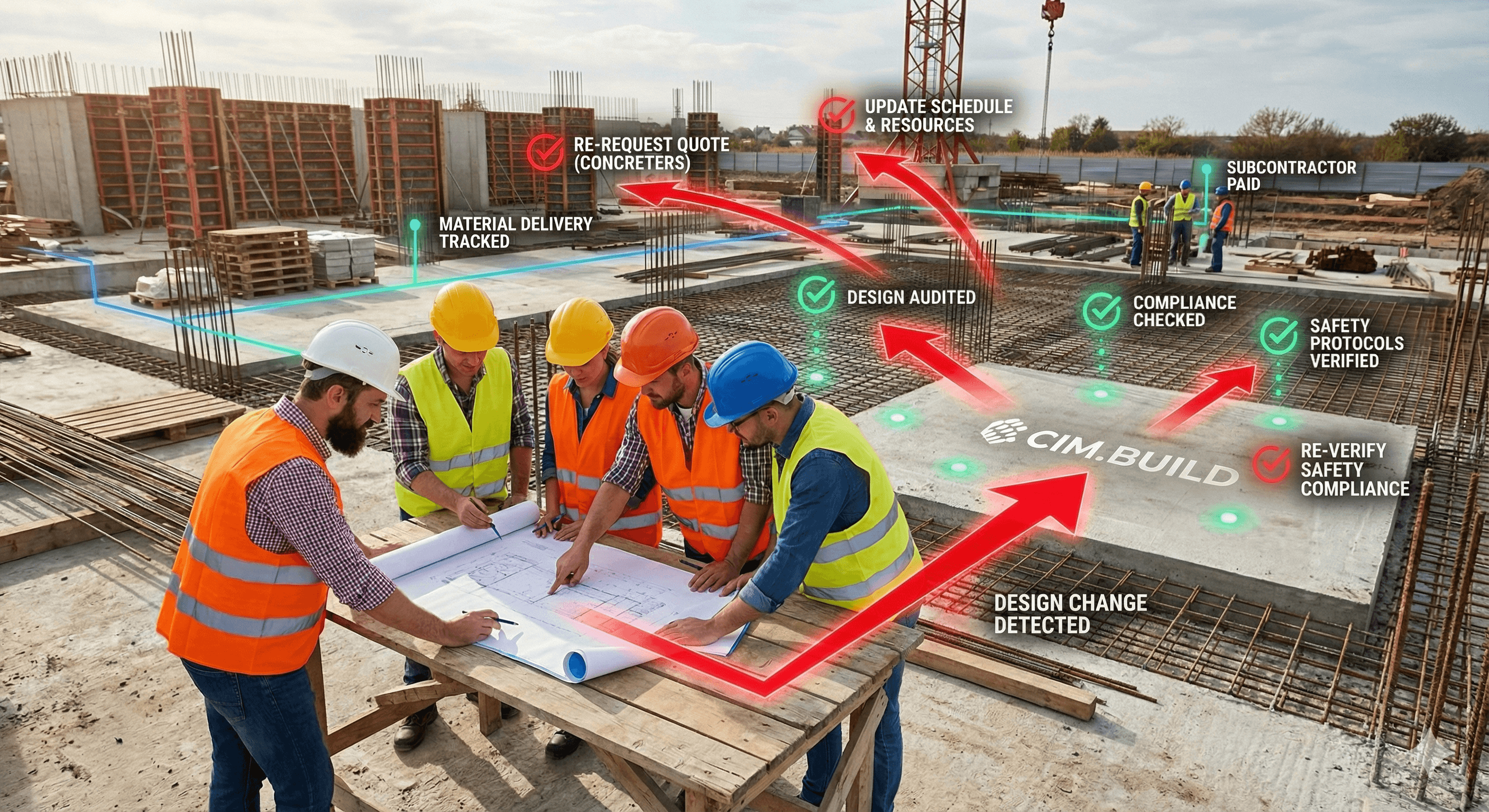
You’re not losing margin because of bad delivery — you’re losing it because changes are discovered too late.
Critical design and scope changes are hiding across drawings, revisions, and consultant updates. By the time they’re noticed:
The work is already built
The cost is already sunk
The variation is already disputed
CIM gives you early visibility into the changes that actually matter commercially — while there’s still time to act.
It works with the tools you already use, not instead of them.
But CIM is not:
A silver bullet for poor governance
A zero-touch system with no accountability
For Developers
Developers define the vision, but the financial risk lies in the details. As design information scatters across hundreds of drawings and consultant revisions, vital discrepancies often go unnoticed until construction is already underway.
This creates a blind spot.
By the time issues surface at a board or finance level, options are limited:
Costs are already committed
Timelines are already impacted
Accountability is unclear
CIM helps developers understand what is changing inside a construction project — and whether those changes materially affect cost, time, or risk — without needing to interpret technical drawings or construction detail.
It provides early visibility into the changes that matter commercially, so decisions can be made with context, not hindsight.
But CIM is not:
A replacement for your project team
A substitute for active oversight and governance